

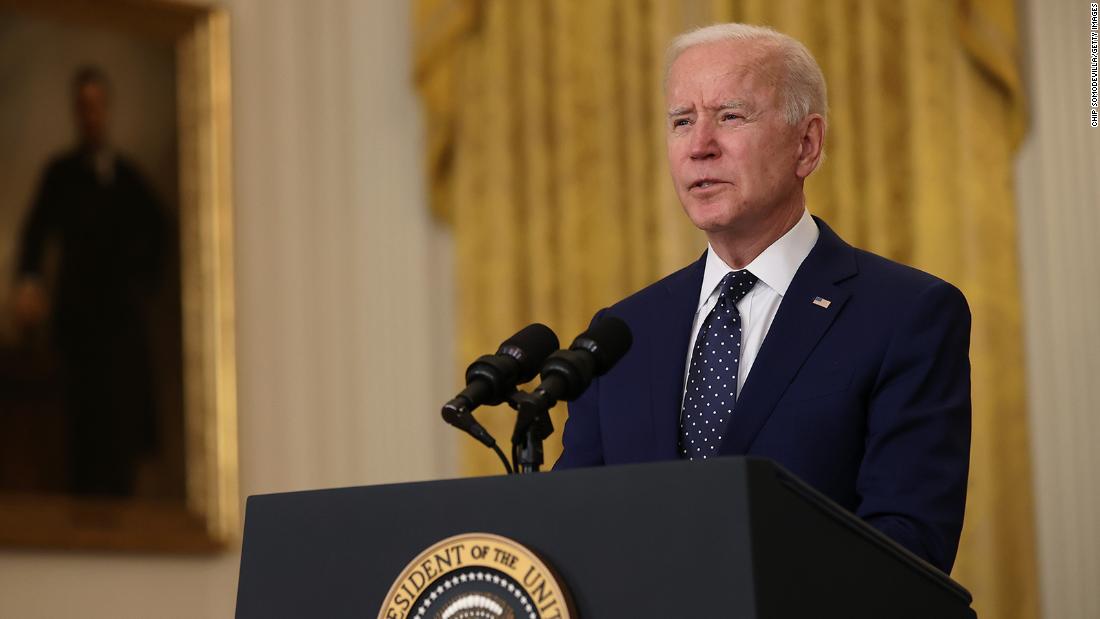
The President’s official recognition risks a potential fracture with Turkey but signals a commitment to global human rights
In a statement marking the 106th anniversary of the massacre’s start, Biden wrote, “Each year on this day, we remember the lives of all those who died in the Ottoman-era Armenian genocide and recommit ourselves to preventing such an atrocity from ever again occurring.”
“Today, as we mourn what was lost, let us also turn our eyes to the future — toward the world that we wish to build for our children. A world unstained by the daily evils of bigotry and intolerance, where human rights are respected, and where all people are able to pursue their lives in dignity and security,” Biden said. “Let us renew our shared resolve to prevent future atrocities from occurring anywhere in the world. And let us pursue healing and reconciliation for all the people of the world.”
The move fulfills Biden’s campaign pledge to finally use the word genocide to describe the systematic killing and deportation of Armenians in what is now Turkey more than a century ago. Biden’s predecessors in the White House had stopped short of using the word, wary of damaging ties with a key regional ally.
Cavusoglu on Saturday said Ankara completely rejects Biden’s use of the term.
The government of Turkey often registers complaints when foreign governments describe the event, which began in 1915, using the word “genocide.” They maintain that it was wartime and there were losses on both sides, and they put the number of dead Armenians at 300,000.
Presidents Barack Obama and Donald Trump both avoided using the word genocide to avoid angering Ankara.
The declaration will not bring with it any new legal consequences for Turkey, only diplomatic fallout.
As vice president, Biden dealt frequently with Erdoğan and made four trips to Turkey, including in the aftermath of a failed coup attempt. But since then he’s offered a less-than-rosy view of the Turkish leader.
“I’ve spent a lot of time with him. He is an autocrat,” he told the New York Times editorial board in 2020. “He’s the President of Turkey and a lot more. What I think we should be doing is taking a very different approach to him now, making it clear that we support opposition leadership.”
Biden spoke by telephone with Erdoğan on Friday, his first conversation with the Turkish leader since taking office. The long period without communication had been interpreted as a sign Biden is placing less importance on the US relationship with Turkey going forward.
The two men agreed to meet in person on the sidelines of a mid-June NATO summit in Brussels. The White House said Biden conveyed “his interest in a constructive bilateral relationship with expanded areas of cooperation and effective management of disagreements,” but the readout did not mention the Armenian genocide issue.
The campaign of atrocities Biden is acknowledging began the nights of April 23 and 24, 1915, when authorities in Constantinople, the Ottoman capital, rounded up about 250 Armenian intellectuals and community leaders. Many of them ended up deported or assassinated. April 24, known as Red Sunday, is commemorated as Genocide Remembrance Day by Armenians around the world.
The number of Armenians killed has been a major point of contention. Estimates range from 300,000 to 2 million deaths between 1914 and 1923, with not all of the victims in the Ottoman Empire. But most estimates — including one of 800,000 between 1915 and 1918, made by Ottoman authorities themselves — fall between 600,000 and 1.5 million.
Whether due to killings or forced deportation, the number of Armenians living in Turkey fell from 2 million in 1914 to under 400,000 by 1922.
As a candidate, Biden said that if he were elected “I pledge to support a resolution recognizing the Armenian Genocide and will make universal human rights a top priority for my administration.”
Similar pledges have gone unfulfilled before. When Obama was running for president, he declared in a lengthy statement that he shared “with Armenian Americans — so many of whom are descended from genocide survivor — a principled commitment to commemorating and ending genocide.”
Some officials who served in Obama’s administration, including his deputy national security adviser Ben Rhodes and then-US Ambassador to the United Nations Samantha Power, later voiced regret at not having taken the step. Power is Biden’s nominee to lead the US Agency for International Development.
A group of more than 100 Republican and Democratic lawmakers wrote a letter to Biden this month calling on him to formally recognize the Armenian genocide. The group was led by Rep. Adam Schiff, a California Democrat. A large Armenian American community resides in and around Schiff’s district in Los Angeles.
House Speaker Nancy Pelosi said in a statement Saturday that “our hearts are full of joy that President Biden has taken the historic step of joining Congress with formal recognition on Armenian Genocide Day.”
“To commemorate this solemn day of remembrance, let us pledge to always stand strong against hatred and violence wherever we see it and recommit to building a future of hope, peace and freedom for all the world’s children.”
This story has been updated with additional details Saturday.
CNN’s Daniella Diaz, Donald Judd and Jasmine Wright contributed to this report.