

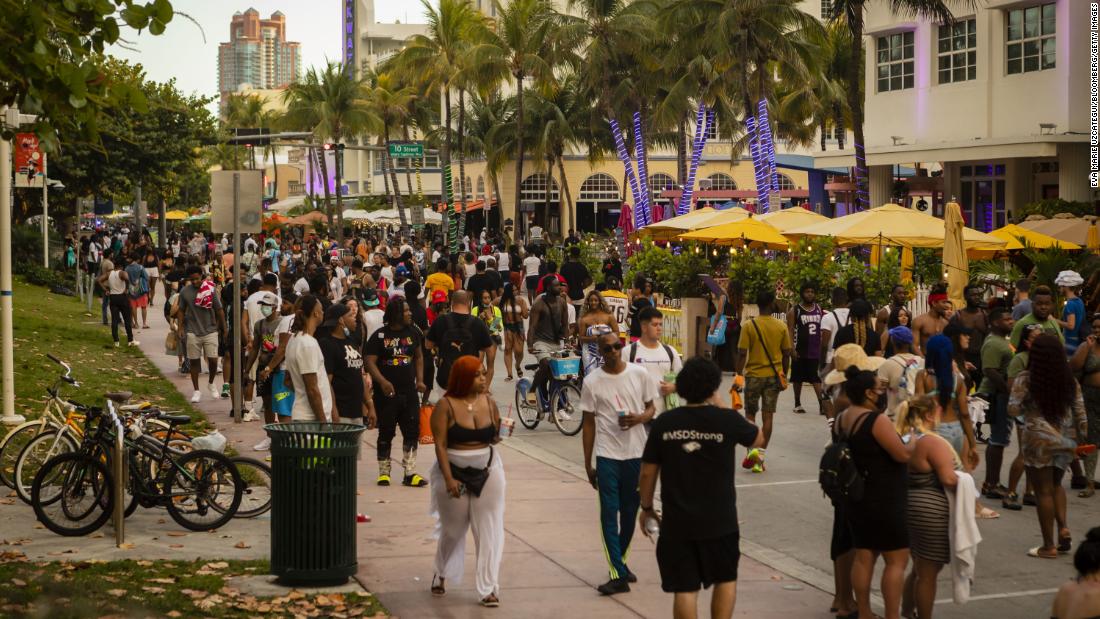
Lifting measures early, disregarding guidance and politicizing public health. Familiar mistakes may hinder progress.
“We are so close — so very close — to getting back to the everyday activities we all miss so much,” Centers for Disease Control and Prevention Director Dr. Rochelle Walensky said during a recent White House Covid-19 briefing. “But we’re not quite there yet.”

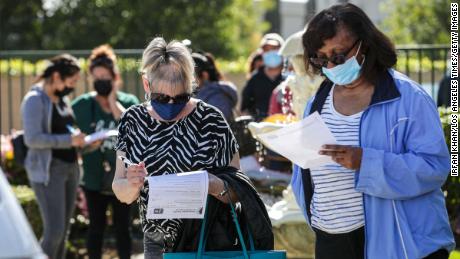
And again, it may be familiar mistakes that hinder the country’s progress: lifting critical measures too early, disregarding experts’ guidance and politicizing public health tools.
“At this point in the pandemic we know what to do,” emergency physician and CNN Medical Analyst Dr. Leana Wen said. “And by not doing it, and in some cases actually going against guidance, we are doomed to repeat what happened before.”
What that could mean is more unnecessary infections, hospitalizations and more American lives lost.
Lifting life-saving measures too early
After a catastrophic winter surge, cases of the virus plummeted for several weeks earlier this year. At the same time, vaccinations began slowly ramping up.
But in the past six weeks, more than a dozen state leaders have eased restrictions — even as case numbers began flattening at levels that experts warned were uncomfortably high, before they eventually started inching back upward.
Experts are worried about the quick abandonment of safety measures as the virus still runs rampant. They’ve worried before — and they were right.

“The wave across the Southern states in the summer, that was due to premature lifting of restrictions and masks,” said Dr. Peter Hotez, dean of the National School of Tropical Medicine at Baylor College of Medicine. “It bears some resemblance to what we’re seeing now.”
“Prematurely relaxing masks and social distancing restrictions, that seems to be a recurring theme with each of the peaks that we’ve seen,” he added.
“I worry very much that as much as the vaccines are a major new development, our opening up everything in the face of what we know is happening in Europe … that’s a really difficult proposition,” Osterholm said.
Going against experts’ advice
But getting the country to heed experts’ advice was no easy task before — and it’s an even bigger challenge in the face of Covid-19 fatigue, nearly 13 months into the pandemic.

“There are two reasons why half a million Americans lost their lives,” Hotez said. “One was due to the virus … the second was the defiance. The defiance of the public health interventions.”
Defiance from both political leaders and residents.
“Every time you have an increase in travel — whether that was the Fourth of July, or Thanksgiving or the winter holidays — where you have people mixing across households, that has … led to a surge,” epidemiologist Dr. Celine Gounder recently said on CNN.

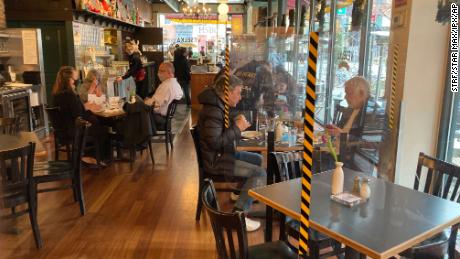
“You don’t want to be the person to die three days before you were scheduled to get your Covid-19 shot,” Osterholm said.
High infection numbers now could mean A) more preventable illness and deaths and B) a higher chance that more concerning variants of the virus develop, Wen said.
“In a sense, we could also be prolonging the pandemic here in the US and worldwide by not taking the aggressive measures now,” she added.
Vaccines could give people a strong incentive to listen to the guidance, experts say, by providing a clear end game.
“Giving people a clear timeline is important because we can’t just tell people to hold off indefinitely,” Wen said. “But if we say to people, ‘It’s a matter of weeks before you are fully vaccinated, please, can you hold off until then?’ I think a lot of people would be willing to do that.”
Politicizing public health tools
But among the factors hurting the US the most in its response to Covid-19, experts say, is the deep division that helped politicize life-saving public health tools, like face masks.

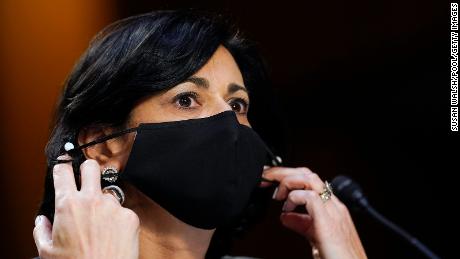
“A mask is nothing more than a life-saving medical device, and yet it got categorized in all sorts of other ways that were not factual, not scientific, and frankly dangerous,” National Institutes of Health Director Dr. Francis Collins said during an interview with “Axios on HBO” in February. “And I think you could make a case that tens of thousands of people died as a result.”
“There were people who were not wearing masks because of a political statement,” Fauci said on CNN last week, speaking to the national debate over masks. “That is really, you know, inexplicable, because it’s not a political thing. It’s a public health measure.”
“I really worry and I’m actually quite certain that we’re not going to reach herd immunity because of it,” Wen said. “At least we’re not going to reach herd immunity in 2021. I can’t see us getting to that point because of how vaccines have been so politicized.” Experts including Fauci have estimated somewhere between 70% to 85% of Americans would need immunity — either through a vaccine or from recovery after a Covid-19 infection — to get control of the virus in the US.


“I expect as a country we’ll get to 50% vaccination rate of the population. But we’re going to have a harder time getting from 50% to 70%. And it’s about overcoming the skepticism, it is about education,” he said.
When asked if he thought the politicization of vaccines could keep the US from reaching the needed vaccination levels to suppress the spread of the virus, Hotez said: “It will. Unless there’s a shift or change, it will.”
That’s why, he added, there need to be active efforts, including from the federal level, to reach those communities and combat anti-science and disinformation campaigns and encourage vaccinations.
It’s the only way to reach the normalcy we’ve all so longed for.