

China is experiencing a rural tourism boom amid pandemic
And the Chinese government couldn’t be more pleased.
But Chinese tourists aren’t just heading to their country’s historic and natural wonders — some are looking for something a bit different.
In posts to Chinese social media site Weibo, one user named Ancailie said after spending a day picking mulberries, watching rice grow and eating home-grown food she was “much happier.”
Another user, laozhenyiwen, described how they had gone to the country to fish and eat seafood for the recent May Day holiday, happy to have “avoided crowds.”
Chinese-owned Trip.com, one of the world’s largest online travel agencies, said by March 2021, rural tourism trips in China had increased year-on-year by more than 300%.
The trend is so lucrative that Trip.com is planning a “five year action plan” to promote rural tourism, which includes cultivating 10,000 professional agents with a focus in the area and investing 1 billion yuan ($150 million) in rural tourism industry funds.
Zhou Mingqi, founder and general manager of Shanghai Tour Guide Enterprise Management Consulting, said Chinese people were getting tired of the lack of leisure opportunities and unique experiences in the country’s big cities.
“There is a need to experience a different kind of life, like idyllic scenery or countryside life, to change a lifestyle on the weekend,” he said.
The simple life
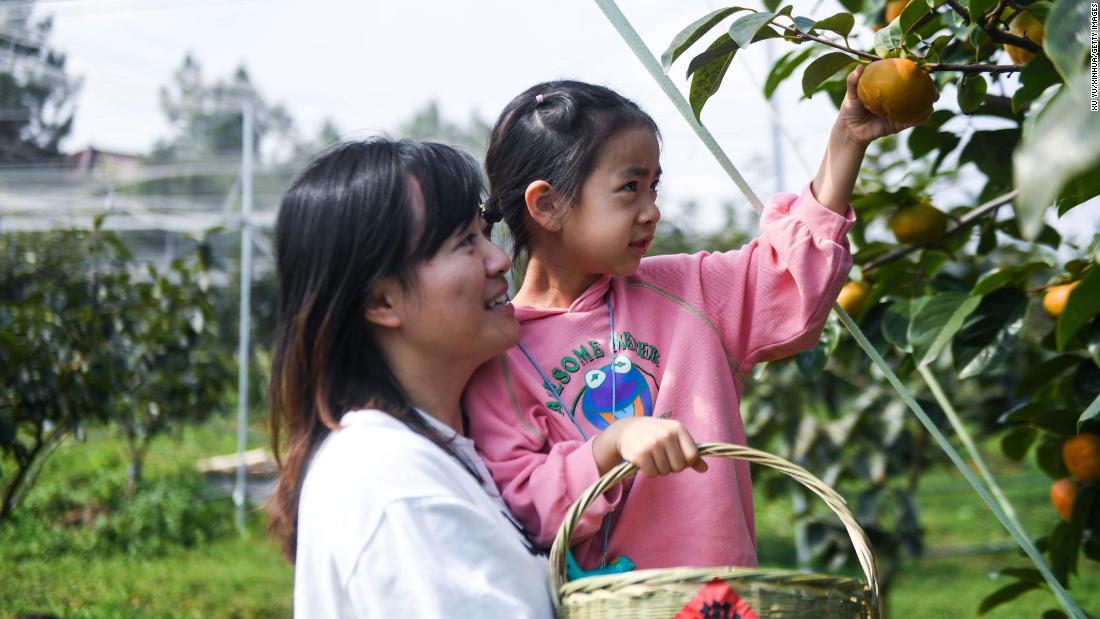
Wang Shang works for a Beijing-based company that helps coordinate countryside tours and activities. She said that in one of the hotels she worked for, visitors can experience growing their own food, practice farming and learn about the region’s traditional crafts and customs.
“Most weekend trips guests are kindergarten or elementary school students and their parents,” she said.
While some of the countryside hotels are quite elaborate, others can be reasonably minimalist, with activities as simple as picking strawberries, visiting folk museums or attending local operas.
In Wang’s opinion, there are two main reasons why people were enthusiastic to vacation in the countryside — the isolation, and experiencing a healthy lifestyle.
One of the hotels Wang worked at, in eastern Shandong province, opened in May 2020 — just after the worst of the initial Covid-19 epidemic in China — and it was quickly filled by people looking to holiday in the relative safety of the countryside, she said.
“The population density of rural areas is low, and virus prevention and control have been done well. So many urban families choose to go (there),” she said.
Wang said visitors from big cities come to buy flour, noodles, meat, eggs, honey and liquor, among other items. “For each parent-child trip, we will arrange picking or planting activities so that children can learn about the crops. Parents are also very willing to take their children to play in the mud,” Wang said.
“The guests go into the village to drink soy milk, watch the piggies in the pigsty and so on. Guests like these activities.”
In one video, Li plants seeds to grow soy beans and then make soy sauce. In another, she picks peaches and berries to make jam, creating it naturally without any food additives.
But despite the appearance of an authentic country experience, Zhou said that a growing amount of rural hotels and villages were trying to attract visitors.
Some rural areas were even engaging professional organizations to try to improve their appeal, Zhou said, planning and design experts who specialize in bringing in tourists.
“Nowadays, the rural areas in many places have indeed undergone major changes. Especially after renovating for tourism, it will become much more beautiful than in the past, because the rural areas in the past had no planning and no design. Farmers just built houses,” he said.
Poverty alleviation
The rapid growth in rural tourism isn’t just the result of the pandemic or rapid urbanization in China. It’s also a major government policy.
Under President Xi Jinping, the Chinese government has been attempting to revitalize rural areas and support poor citizens in the countryside through a program of poverty alleviation.
But not every investment has been a success. With large amounts of money on offer and targets to be hit, Shanghai’s Zhou said that some projects — especially in remote areas that are hard to access — had yet to see a return on investment.
“I’ve seen places investing tens of millions but didn’t bring many travelers,” he said.
What to expect in the future
Wang, from the tourism company, said she believed rural sightseeing was only just beginning to take off and in the future, it would focus more on China’s myriad of local cultures.
“Looking at the agricultural and rural development policies in recent years, I think that rural areas have lots of potential,” she said.
“For countryside hotels, I think there will be more tourism products with content based on local culture in the future, which are in-depth cultural tours.”
The national government doesn’t appear to be backing down on its promotion of rural tourism. In a draft of the Chinese Communist Party’s 14th Five Year plan, which will run from 2021 until 2025, the government called for further strengthening of “leisure agriculture, rural tourism and the homestay economy.”
Zhou, from Shanghai Tour Guide Enterprise Management Consulting Company, said with rural tourism being supported both by government policies and customer demand, the future was bright.
“I am definitely optimistic about the overall prospects,” he said.